Ganesh Vs The Third Reich

An Epic Trilogy of Reviews about an Epic Weekend of Theatre comes to a conclusion with Andy Vs. Ganesh Vs. The Third Reich

droicheadyouththeatre's avatarDroichead Youth Theatre Online

Andy McLoughlin’s epic trilogy of reviews concludes with Ganesh Vs. The Third Reich, by Back to Back Theatre, seen with the Young Critics programme as part of this year’s Dublin Theatre Festival.

meta
A term, especially in art, used to characterize something that is characteristically self-referential.
-Urban Dictionary

Andy Vs. Ganesh Vs. The Third Reich

In a weekend filled with weird plays, it seemed fitting to end it with a play that was really two normal plays. The first storyline of Ganesh Vs. The Third Reich tells the story of the Hindu god of overcoming obstacles (oh how symbolic!) trekking through Eastern Europe on a quest to reclaim the symbol of the Swastika from Nazi Germany. This story is interspersed with scenes showing a sort of “Making of the Show” in which we’re given a fictionalised account of the production’s story from start to grizzly end. As the play progresses…

View original post 724 more words

The Seagull and Other Birds

In the second of his reviews, Droichead Youth Theatre’s own Andy McLoughlin gives us his own insight on Pan Pan’s production from the recent DTF. Andy was one of NAYD’s Young Critics for 2014

droicheadyouththeatre's avatarDroichead Youth Theatre Online

In this, the darker, edgier sequel to last week’s blog, Andy McLoughlin reviews PanPan theatre’s adaptation of the Chekov classic, “The Seagull”, titled “The Seagull and Other Birds”, seen with the Young Critics programme as part of this year’s Dublin Theatre Festival

Anton Chekov was a highly popular Russian comedy writer in the nineteenth century. People would come to his shows from miles around to be made laugh by his shows. Unfortunately, tastes have changed and his plays, if performed as originally intended, probably wouldn’t elicit the same reactions today.  Some people would argue that performing these shows directly translated, exactly as performed at the time isn’t the best way to honour his memory, and instead what is important is to reflect the spirit and intentions of his original work, comedy and all.  To these people I say “Balderdash!” The only correct way to recreate a text is with pedantic…

View original post 543 more words

[ Title of Review]- An NAYD Young Critic review of [Title of Show] by Bríd Nolan

Over the last few weeks in the run up to NAYD’s Young Critics Panel, we’ve published a series of reviews from the Young Critics. With the Young Critics arriving today we publish our final review. 

Over the summer months,we asked the Young Critics to attend some shows on their own. We asked them to make a short vlog review of their experience. We then asked a selection of them to turn these into written reviews. Dr. Karen Fricker offered some editorial advice.

Here Bríd Nolan reviews [Title of Show] by Jeff Bowen and Hunter Bell.

[Title of Show] by Jeff Bowen and Hunter Bell, directed by Angeline Milne
Performed by Andy Carberry, Adam Tyrell, Ciara Ivie, Sarah Jane Williams, and Mark Cox
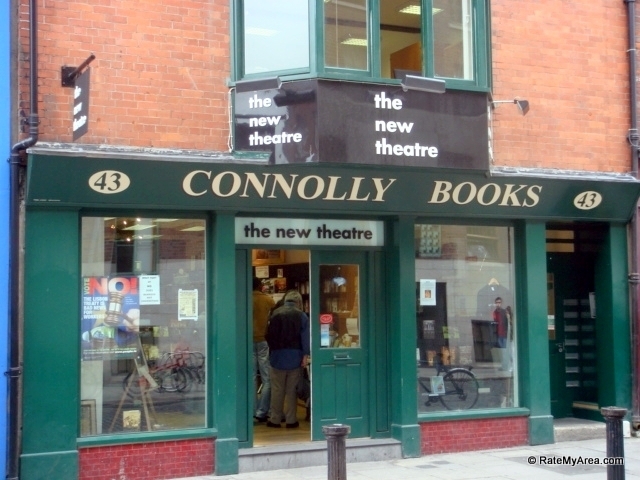
Viewed on 13t August 2014 at the New Theatre, Dublin. Reviewed by Bríd Nolan

title-of-show

Going to see [Title of Show] is like watching a rehearsal for a play you’ve failed to get a part in. The cast members greet the audience laconically as they stroll on stage, and the fourth wall swiftly becomes an object of derision, one the cast members occasionally snipe at throughout the play.

[Title of Show] revolves around the lives and work of four struggling actors and a keyboardist. Two of the characters, Hunter and Jeff (based on the writer Hunter Bell and composer Jeff Bowen) decide to write a musical about their attempts to write a musical for the 2004 New York Musical Theatre Festival.

The effect is of a blurred, devised timeline of skits spliced by messages left on the voicemail at Hunter and Jeff’s apartment. The musical spans the time between the moment the characters decide the play must be written and shortly after the show’s premiere. The storyline relies heavily on self-parody to keep the audience entertained and in this lies both its appeal and its downfall. While the ironic humour sets the play firmly within the its characters’ lives and keeps things from becoming too abstract, the jokes become a little stale in the second half. It’s a pretty realistic, authentic look at human relationships, albeit one that spurns sincerity.

The set of four chairs, some bookshelves and a keyboard effectively evokes the setting of a modest New York apartment, with a background of exposed brick walls. It makes for a sparse and unforgiving staging which deflects little attention from the actors themselves. This contrasts with a typically lavish Broadway set and budget. This minimalistic approach is both in an attempt to draw attention to the production’s origins, and a reflection of the ethos of the producing group, Ill Advised Theatre, which was set up last year to bring contemporary musicals to Dublin on relatively shoestring budgets. They attempt to keep ticket prices low, and are partially financed by crowdfunding. Given its subject matter and origins, [Title of Show] was thus an apt choice for Ill Advised’s first full scale production. [Title of Show] also continues the New Theatre’s tradition of presenting innovative and unusual productions.

DSC06392_large

Musically, the cast is strong, especially Sarah Jane Williams as Heidi. The belivabilty of all the actors, especially Jeff (Andy Carberry), and Hunter (Adam Tyrell) is absolute. We are always aware of the dynamic between the pair, as their old friendship is threatened by the pressures of ambition and show business, but at the same time this is never overstated.

The gags occasionally grate and wear thin especially in the second half when the suspense dissolves as the eventual payoff (Broadway!) is reached. The meta-theatrical aspect of the show is intriguing but didn’t manage to hold the audience’s attention throughout. Nonetheless the production’s biggest accomplishment lies the timing and balance of its parody; it relies on a peculiarly self-aware humour and narrowly skirts the risk of of becoming self indulgent.

Bríd Nolan is a member of Cabinteely Youth Theatre and an NAYD Young Critic for 2014

Heartbreak House – A Review by NAYD’S Young Critics

In the run up to NAYD’s Young Critics Panel on Oct 5th as part of the Dublin Theatre Festival, we continue to publish a series of reviews from the Young Critics.

Over the summer months,we asked the Young Critics to attend some shows on their own. We asked them to make a short vlog review of their experience. We then asked a selection of them to turn these into written reviews. Dr. Karen Fricker offered some editorial advice.

So with less than a week to go to the Young Critic’s Panel, Catriona Quigley reviews Heartbreak House 

Heartbreak House by George Bernard Shaw, directed by Roisin McBrinn

Performed by Lisa Dwyer Hogg, Nick Dunning, Kathy Kiera Clarke, Brendan Conroy, Marcus Lamb, Mark Lambert, Aislin McGuckin, Chris McHallem, Don Wycherley, and Barbara Brennan

Sets by Alyson Cummins, lighting by Paul Keogan, Costumes by Niamh Lunny, music and sound design by Philip Stewart

Viewed on August 21st 2014 at the Abbey Theatre

Reviewed by Caitriona Quigley

Heartbreak House: the name seems to imply anything but good-naturedness. At the same time, though, period dramas bring guilty pleasure for many, particularly now that Downton Abbey is so popular. And I’ve never studied George Bernard Shaw at all. Given all this, it was hard to know what to expect from the Abbey’s production – but I found myself sitting transfixed.

Shaw set his scene in 1914, just before the outbreak of the First World War, ensuring a plenitude of satirical jabs at the expense of the affluent upper classes who confined themselves to their trivial problems as the world changed around them.


Mark Lambert (Captain Shotover), Aislín McGuckin (Lady Ariadne Utterword), Kathy Kiera Clarke (Hesione Hushabye), Lisa Dwyer Hogg (Ellie Dunn) and Nick Dunning (Hector Hushabye) in Heartbreak House by Bernard Shaw, directed by Róisín McBrinn. Photo by Sarah Doyle.

Mark Lambert (Captain Shotover), Aislín McGuckin (Lady Ariadne Utterword), Kathy Kiera Clarke (Hesione Hushabye), Lisa Dwyer Hogg (Ellie Dunn) and Nick Dunning (Hector Hushabye) in Heartbreak House by Bernard Shaw, directed by Róisín McBrinn. Photo by Sarah Doyle.

The play concerns a colourful cast of characters who congregate for a country weekend at the dwelling of the surly yet outspoken Captain Shotover, played with appropriate gusto by Mark Lambert. Shotover has been estranged from his younger daughter Ariadne (Aislin McGuckin) for 23 years — yet she seethes when both the Captain and her eccentric sister Hesione (Kathy Keira Clarke) fail to recognize her. Hesione, meanwhile, has invited her friend, Ellie Dunn (the excellent Lisa Dwyer Hogg) to stay for the weekend. When Ellie arrives with her father and her fiancé in tow, she reveals that she’s had her head turned by a mysterious man, who as it transpires, may be a little too familiar to some of the guests…

I admired how Shaw deconstructs various archetypes often found in period dramas, such as the naïve young maiden, the crotchety patriarch, and the well-meaning best friend. The play’s central theme is deceit, and no character ended up to be as they appeared at the play’s outset. The characters and the audience are simultaneously strung along by this deceit, which paves the way for a literally explosive conclusion!


Aislín McGuckin (Lady Ariadne Utterword), Nick Dunning (Hector Hushabye) and Mark Lambert (Captain Shotover) in Heartbreak House by Bernard Shaw, directed by Róisín McBrinn. Photo by Sarah Doyle.

Aislín McGuckin (Lady Ariadne Utterword), Nick Dunning (Hector Hushabye) and Mark Lambert (Captain Shotover) in Heartbreak House by Bernard Shaw, directed by Róisín McBrinn. Photo by Sarah Doyle.

Heartbreak House, is, at times, an incredibly complex production to follow. I can’t count how many times my mum and I exchanged expressions of confusion about how the plot swerved in many directions, often with no prior warning. Yet, the dazzling set by Alyson Cummins, the actors’ impeccable comic timing and exquisite costumes by Niamh Lunny ensure that this production is, at its best, a genuinely enticing piece of theatre.

In conclusion, we found that Shaw’s razor-sharp wit and jovial banter made for insightful and pleasant viewing. Very highly recommended!

Catriona Quigley is a member of M.A.D Youth Theatre, Dundalk and an NAYD Young Critic for 2014

Ballyturk:a video review by Aifríc Ní Dhochartaigh

In the run up to NAYD’s Young Critics Panel on Oct 5th as part of the Dublin Theatre Festival, we will be publishing a series of reviews from the Young Critics.

Over the summer months we asked the Young Critics to attend some shows in their own home venue. We asked them to make a short vlog review of the experience.

Here is a special vlog of Enda Walsh’s Ballyturk. With Ballyturk having it’s press night in London tonight at the National Theatre, we thought this would be a timely post.

Aifríc is a member of NAYD’s Young Critics for 2014

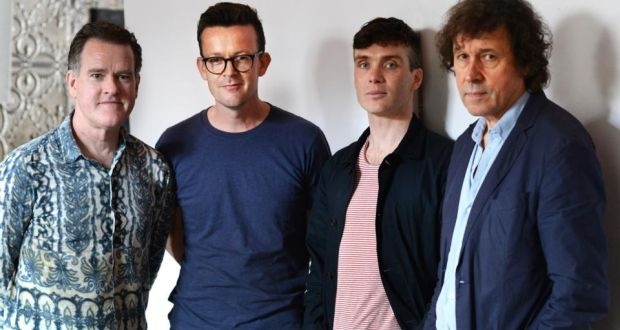
 From left, Mikel Murfi, Enda Walsh , Cillian Murphy and Stephen Rea. Photograph: Cyril Byrne


From left, Mikel Murfi, Enda Walsh , Cillian Murphy and Stephen Rea. Photograph: Cyril Byrne

Well Worth Five Minutes Of Your Time

In the run up to NAYD’s Young Critics Panel on Oct 5th as part of the Dublin Theatre Festival, we will be publishing a series of reviews from the Young Critics.

Over the summer months we asked the Young Critics to attend some shows in their own home venue. We asked them to make a short vlog review of the experience. We then asked a selection of them to turn these into written reviews. Dr. Karen Fricker offered some editorial advice.

With three weeks to go to the Young Critic’s Panel Andy McLoughlin reviews Five Minutes Later  


5 Minutes Later, By Ellen Flynn, directed by Marc Atkinson
Performed by Bob Kelly, Nichola McEvilly, Manus Halligan, and Sophie Jo Wasson
Set and lighting design by Colm McNally
Sound Design by Osgar Dukes
Costume Design by Mary Sheehan
Viewed on August 30th at The Lir
Review by Andy McLoughlin

Ellen Flynn's Five Minutes Later, presented by Sugarglass Theatre Company

Ellen Flynn’s Five Minutes Later, presented by Sugarglass Theatre Company

The plot of Ellen Flynn’s new play is certainly a familiar one: four twenty-something strangers meet at a speed-dating night and become entangled in a strange love quadrangle while struggling with fidelity, friendship and loyalty. Given all the familiar tropes and superficial philosophy associated with these kinds of plays, Flynn’s talent is in resisting those clichés. Rather than presenting us with archetypes and then subverting them, we’re shown complex characters who resist being reduced to archetypes in the first place. There are no good or bad people in these relationships, only ambiguous choices made by flawed people to ambiguous ends. The play attempts to show our collective social network for what it really is: normal people navigating a world that isn’t.

The difficult themes of vanity, objectification and secrecy are captured well by the design elements of the play. The set, which at times takes up the entire width of the already small stage, is comprised of four door-frame-sized two-way mirrors which move through the space on tracks. At the best of times they serve to frame the action of the play, surrounding the characters and forcing them to confront themselves or allowing them to judge each other from behind a reflective screen. Occasionally though, it seems there’s a tendency to manipulate these mirrors just so they don’t go to waste. This endless fluidity disorients and induces fatigue as often as it heightens the drama.

In some cases, the non-stop movement on stage fits nicely into the hectic and sometimes surreal nature of the play. As for the plot itself, things are a little more muddled. The lion’s share of the play is effectively a highlights reel of the four characters’ relationships as they go from strangers to lovers and back again.  As the show’s title suggests, the concept of time is a loose one and we often see these relationships grow and change without any real indication of how much time has passed, which leads to some confusion. The plot is further convoluted by hectic dreamlike interludes and even in the most intimate moments, we’re distracted by the actors manipulating the set around them to change the space.

It’s in returning to the more real, albeit complicated interactions between these four friends/foes/lovers that Atkinson’s talent really shines through. With the help of a great cast of characters and actors (Nichola McEvilly being the MVP as a desperate housewife seeking escape), speed, distance and emotions are all explored in their fullest range to give a dizzying sense of drama in the lives of these characters. Whatever about surreal interludes and unpredictable plot pacing, this is ultimately a play that feels as strange and immediate to us in the audience as it does to those on stage. And that is no small feat.

Andy McLoughlin is a member of Droichead Youth Theatre and a participant on NAYD’s Young Critics Programme 2014

SWING SWUNG INTO ACTION FROM THE FIRST WORD

In the run up to NAYD’s Young Critics Panel on Oct 5th as part of the Dublin Theatre Festival, we will be publishing a series of reviews from the Young Critics.

Over the summer months we asked the Young Critics to attend some shows in their own home venue. We asked them to make a short vlog review of the experience. We then asked a selection of them to turn these into written reviews. Dr. Karen Fricker offered some editorial advice.

First up, Sophie Quin reviews Swing 


Swing by Steve Blount, Peter Daly, Gavin Kostick and Janet Moran, directed by Peter Daly
Performed by Steve Blount and Janet Moran
The Source Arts Centre, Thurles, County Tipperary, performance viewed on 26 June 2014
Review by Sophie Quin


Janet Moran and Steve Blount in Swing by Fishamble Theatre Co.

Janet Moran and Steve Blount in Swing by Fishamble Theatre Co.

“Is… Is this swing?”
And so from the first timid and engaging question put to the audience, Swing caught my attention as it danced into a familiar, yet new world. Not being a general admirer of dance shows (I find the lack of dialogue often compromises plot), I wasn’t sure what to expect, but I was pleasantly surprised by what I found.
In a swing dance class May (Janet Moran) and Joe (Steve Blount) meet for the first time. Their lives have stalled and they can’t decide what to do next. The class offers them an escape from the ordinary, to move on from the past, and possibly to live their lives anew. Drawing on the familiar issues of recession, divorce, emigration, love, changing your mind, and the omnipresent risk of failure, Swing retained a deep-rooted and quintessentially Irish style, as it mixed the serious with the comical and used humour as a possible solution to life’s problems.

Throughout the class we’re introduced to an array of characters: moody dance instructors, terrorised beginners, old lovers, and veteran swing dancers, each bringing their own stories to the stage. The actors swop characters multiple times by yelling “change places,” often at awkward moments; with a gesture, voice or posture they become a different person before your eyes. At times the transitions were so rapid that it appeared that there were far more than two performers onstage. Each character retained their own personality, even if some were slightly stereotypical. For instance the “foreign girl” was definitely foreign, and it was obvious that another character was homosexual from the cliché way they spoke and moved. Yet this was easily carried and probably necessary since there was such a varied range of characters. Blount and Moran interpreted each character with great flair. The direction by Peter Daly ensured the performance was crisp and elegant, but could also incorporate the gut-wrenching awkwardness of an argument taken too far. The show was funny but not tactless: none of the gags were out of context.

Fishamble has once again shown that it is at the forefront of new playwriting in Ireland. Swing is part of the company’s Show in a Bag scheme, in which all props and costumes are required to be kept to a minimum so performances can be scaled up to fill a large venue, or down to fit into a small tightly-squeezed café. This economical design meant, in the case of Swing, that focus was on performance and not an overly distracting set, which consisted of two chairs, a bag, a bicycle helmet, water bottles, a disco ball, and the costumes.
Whether you interpret Swing as an analysis of who and what we are rihgt now in Ireland, or as a jovial comedy about ordinary lives and the beginnings of friendship, it is a play that showcases much that is exciting and innovative in performance today. When the disco ball flashed into life, reflecting across the venue, I too was swept up into this ordinary yet extraordinary world. If you get a chance swing along to see this great and effective piece of contemporary Irish theatre.


Sophie Quin is a member of Fracture Youth Theatre in Tipperary and an NAYD Young Critic for 2014

NAYD Young Critics Swing into Summer.


Janet Moran and Steve Blount in Swing by Fishamble Theatre Co.

Janet Moran and Steve Blount in Swing by Fishamble Theatre Co.

With the Young Critics firmly established as a hugely popular and beneficial programme, we decided to pilot some new elements to the programme this summer.

Following on from Alan King’s trip to the Theatre Critics of Wales Awards in February we took on some ideas from Guy O’Donnell and are piloting them for 2014.
Guy is the Arts Development Officer for Bridgend Council in South Wales and runs a Young Critics Scheme there.

Over the summer months we are asking the Young Critics to become programmers and select one professional production that they feel they and their fellow youth theatre members might enjoy. With the support of their local Arts Centres and venues, who will offer special youth theatre discounts to shows, the Young Critics will get to see more productions in their home communities.

The Young Critics will then do a short video blog on the production they saw and submit it to NAYD. From here, four of them will be invited to write reviews for the Young Critics Blog.

The intention of this approach is to allow the Young Critics to take their own independent steps of choosing a show for their fellow youth theatre members to see. They can develop their own programming tastes using some of the learning from Karen Fricker and Alan from the first Young Critics weekend.

The uptake and support from the venues have already been really strong.

The New Theatre in Temple Bar are offering all members of Complex Youth Theatre and Cabinteely Youth Theatre special €10 tickets for all productions.

Fishamble Theatre Company’s production of Swing, is touring over the summer months and has proven a popular choice with the Young Critics.

Members of Fracture/ Play Youth Theatre in Tipperary have received a special two for one deal when it plays at the Source Arts Centre in Thurlas on June 26th. There will be a post show discussion facilitated by Young Critic Sophie Quin.

Meanwhile 30 members of Griese and Kildare Youth Theatres will catch Swing thanks to a very special low price youth theatre rate at the Riverbank Arts Centre, in Newbridge on July 11th. Young Critics Emma Gallagher and Kyle Walsh will get to meet the cast of Swing after the show.

The Garage Theatre is home to Monaghan Youth Theatre and already does a lot to support the work of the youth theatre. Again they are hosting Swing and Lisa McPhillips has chosen this as the show for the group to attend.

In Cork the Everyman is extending their special school rate to Activate, Lightbulb and CIT Cork School of Music YT members. Aimee Wallace from Lightbulb has programmed her group to go see God Bless The Child on its Opening Night.

An Grianán Theatre is home to Letterkenny Youth Theatre. They will continue to provide many opportunities for the members to see shows for free or at significantly reduced rates, as does the Droichead Arts Centre in Drogheda, who have also extended that offer to the members of M.A.D Youth Theatre in Dundalk.

The Roscommon Arts Centre has extended another youth theatre rate to the members of Roscommon County Youth Theatre.

The benefits are huge for all involved. The venues will be building new audiences and all the young people will get to see even more quality theatre than usual. We would hope to develop and establish these relationships between venues and our members over the coming years.

The content created on the video blog and reviews will find a home on the Young Critics blog so expect a lot of updates in August and September.

Those venues supporting the Young Critics for 2014 are:

The New Theatre, Dublin
The Everyman, Cork
The Garage Theatre, Monaghan
An Grianán Theatre, Letterkenny
Droichead Arts Centre, Drogheda
The Source Arts Centre, Thurlas
The Riverbank, Newbridge
Roscommon Arts Centre.

We would like to thank all the venue managers and their staff who have helped support this new initiative.

NAYD Young Critics Continue Into Summer 2014

NAYD Young Critics visit the Abbey Theatre, Dublin for their production of Quietly by Owen McCafferty at the Peacock Theatre

NAYD Young Critics visit the Abbey Theatre, Dublin for their production of Quietly by Owen McCafferty at the Peacock Theatre


 Towards the end of April, this year’s sixteen Young Critics met for the first time. They had the usual three days of viewing exciting theatre while participating in workshops and having a fair amount of craic in Dublin town.

As the summer months approach, we are piloting some new and exciting angles to the Young Critics Programme that, with the support of the youth theatres along with their local venues and arts centres, can expand the Young Critics programme beyond those lucky sixteen.

Through a partnership approach we would hope to involve more young people in their local communities, develop stronger relationships between venues and youth theatres and help to build and sustain local audiences for theatre in that community.

Over the summer months we are asking the Young Critics to become programmers and select one professional production that they feel they and their fellow youth theatre members might enjoy. With the support of their youth theatre leader they will then organize a theatre trip to a professional production in their local Arts Centre or venue.

The Young Critics will then do a short video blog on the piece they saw and submit it to NAYD. From here, four of them will be invited to write reviews for the Young Critics Blog.

The benefits are huge for all involved. The venues will be building new audiences and all the young people will get to see even more quality theatre then they normally would. This should encourage them to go and see more theatre than before and broaden their love and knowledge of the art form. Once the spark is ignited they will choose to go to more and more performances over the coming years and this will have a very positive influence on how they make their own theatre.

This is a really exciting departure for the programme and one that we would hope to develop and establish over the coming years.

www.nayd.ie/programmes/young-critics


NAYD’S Young Critics programme

Some great Insights from Andy McLoughlin, who was one of sixteen Young Critics for 2014.

droicheadyouththeatre's avatarDroichead Youth Theatre Online

This week we are fighting fit and back in action, with an account of NAYD’s Young Critics weekend by Andy McLoughlin!


The Young Critics Workshop took place last weekend over the course of three days and there’s a lot to talk about so I suppose the best place to start is at the start.

About two months ago, after drama, a senior DYT member came in to talk to us about this Young Critics programme in Dublin she had been to. You go see two plays over the course of 3 days in April and again in October. Accommodation and food would be provided and you would get classes on how to analyse theatrical productions. It seemed strange at first to be learning about theatre outside the context of actually being involved, but the idea appealed to me. I knew almost nothing about theatre compared to my almost embarrassing…

View original post 754 more words