Review of The Bród, The Bold, and The Beautiful

By Alisha McGarrity

The Bród, The Bold, and The Beautiful was a physical theatre performance devised by the Quintessence theatre as a part of the local towns pride celebrations. They performed in An Táin Arts Centre on the 27th and 28th of June as a part of Dundalk pride events.

This play had a very minimal set consisting of only 3 chairs which were moved around to disclose the location of that scene, for example they used them to make a bus, lining up to face side stage and they created an image of a couch by pushing the three together.

The play explores the experience of 3 different queer people based in Ireland all of whom grew up in different times, therefore their journey through discovering and accepting their queer identity varied wildly.

One of them was a young adult in 1993 when the law causing homosexuality to be illegal was overturned and he had to deal with the homophobia which ran rampant at the time.

Another story explored was one of a queer woman, who was a young adult in 2015, who tried to help to get people to vote yes to the 2015 marriage referendum after she couldn’t see her girlfriend in the hospital because civil partnership didn’t allow the same rights as marriage does.

The last story was one of a queer person, in current day who was struggling with their gender identity and not feeling as though they belonged even in the LGBT community due to the transphobia which is so common these days. Their story explores personal acceptance and the exploration and change of relationship which occur when one partner is transgender, both binary and non binary.

These stories all started and concluded at the same place, Dublin pride. It opens with them all talking about their first pride and it closes with the three of them meeting at pride in 2024. They end up celebrating the change which has occurred and remembering the future changes that need to be made to make the world safe and inclusive for all queer people. This story was explored through several short monologues, scenes and movement sequence to explore each of the characters personal journeys.

My personal favourite scenes was when the queer woman was going door to door attempting to get people to vote yes in the referendum and having various positive, neutral and mostly negative interactions, she asks an older person would they be willing to vote yes and she responded she absolutely would as it was not her business to stand between two people who loved each other. I really enjoyed this scene as it was not only a really sweet moment but it was one where I could see what the lives and struggles of queer people was like in the generation above mine.

I really enjoyed this play as it explored such rich and interesting stories in a beautiful way. The lows and the sad parts of the play were matched with highs and funny sections which made almost everyone in the audience laugh. I fluctuated from crying to laughing to crying then laughing again throughout this play in the best possible way. I wish I could have seen this play again I loved it.

Alisha McGarrity is a member of M.A.D. Youth Theatre in Co. Louth and is a Young Critic for 2024.
Like We Were Born To Move Review By Emma Fanning

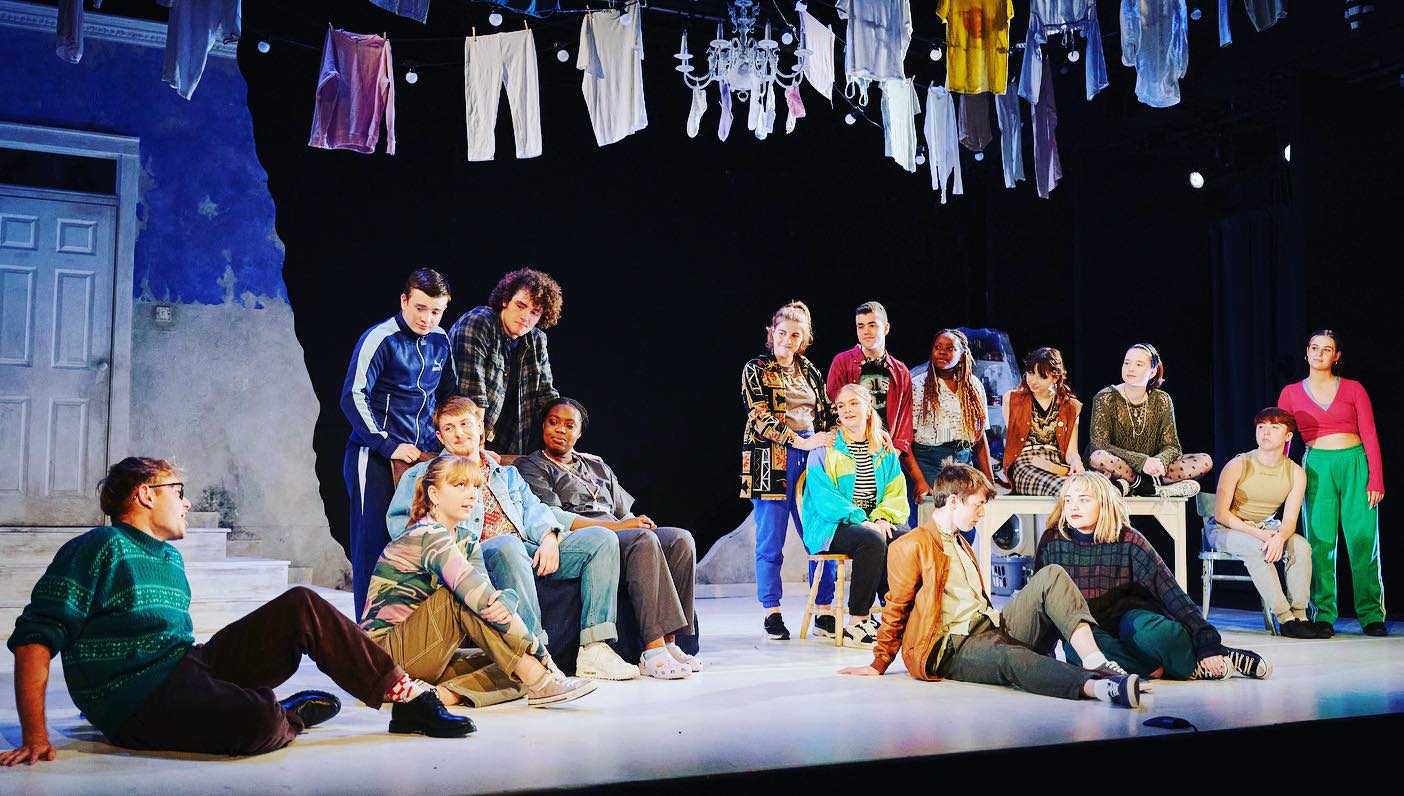
The National Youth Theatre in Like We Were Born To Move by Eimear Hussey. Directed by Niall Cleary. Produced by Youth Theatre Ireland at Abbey Theatre. Photo Credit: Ros Kavanagh.

The National Youth Theatre is an initiative of Youth Theatre Ireland, and this year celebrates its 40th anniversary. It is supported by the Arts Council, Creative Ireland and the Department of Children and Youth Affairs, and is comprised of a cast of young people between the ages of 16 to 21 from all across Ireland. It is an incredible opportunity for these young people to work with some of Irelands best creative teams on a production that is then put on for the public.

This year, the Young Critics were lucky enough to be invited to see the National Youth Theatre’s production, a brand new play ‘Like We Were Born To Move’, written by National Youth Theatre alumni Eimear Hussey and directed by Niall Cleary.

‘Like We Were Born To Move’ is a celebration of youth. It is a play about wanting to become an adult and make your own decisions, and the terrifying bump when you realise you now have to. It centres around the lives of 16 young people, and their struggles with identity, family, loss, sexuality, money, career and friendship. Dance is also a prominent theme, as many of the characters are dancers themselves, or aspire to be.

When we did a bit of research before we saw the show, I was quite shocked to find out that there was 16 cast members. I worried that this would be way too many characters to keep up with and it would become confusing and muddled, like starting a tv show on season 4 without having seen the previous 3 seasons. However, I was surprised by how well these 16 characters were introduced to the audience. It was done gradually, throughout the run of the show. Sometimes characters were spoken about onstage for a few scenes before they actually made an appearance, making it easier to connect them all in my head. The links and relationships between the characters and how they all managed to be individual and different was truly incredible and extremely well thought out. Occasionally I found myself wishing we could see more of some characters that had slightly less of a main role, and I think this is down to the excellent storytelling in the writing, with each character having such a cleverly crafted identity. Obviously with 16 cast members, some were going to have more obviously main roles as others, but I think the balance between them all worked very well and I was really hooked on all of their stories.

It was really lovely to see the chemistry between all of the actors. As someone pointed out in our panel after the show, for a production about young adults and their relationships with each other, there was no kissing onstage at all. However, in my opinion, this cast didn’t need it. They were so incredibly in sync with each other, in their movements and emotions, and you could really feel the intimacy between characters without ever having to show it. They said everything in the pauses between lines and it was a really beautiful thing to watch a group of young people who clearly have so much love for each other in real life translate that to the stage.

Another feature of the National Youth Theatre is their Design and Technical Theatre ensemble, comprised of 4 young people from across the country. The ensemble are given the incredible opportunity to learn from the professional designers working on the production as well as having some influence in the final designs.

The set was designed by set designer Choy-Ping Clarke-Ng. The set itself was simple enough, however, it was taken from simple to incredibly engaging thanks to all the small details dotting the stage. The mismatched chairs, the paint peeling off the door, the laundry spilling out of the washing machine all painted an endearing picture of a house lived in by a group of young people. Little things like socks hanging off the chandelier and a lamp balanced on an old Roses box added to the aesthetics of the set and really made it seem homely and personal, but also slightly falling into disrepair due to the nature of its tenants. You could really see the influence the Design and Tech Ensemble might have had on making the set feel more relatable to young people today.

The same can also be said for the costumes. Designed by costume designer Mae Leahy, each costume was unique to the characters and perfectly suited each actor. The costumes all seemed to have a slight vintage feel to them which makes me wonder if this had anything to do with the Design and Tech Ensemble’s input as a group of young people. Vintage clothing is hugely coming back into style, especially among ‘Gen Z’, so this made the clothing even more realistic and brought the characters further to life.

Overall, this was a really enjoyable production, and definitely a fresh new take on themes that have been shown in media over and over again. It was incredibly refreshing as a young person to see a production about young people, performed by young people and written by a young person. References to things like Longitude and Gilmore Girls elevated the humour in this play to especially appeal to younger audiences, growing up in the 21st century. The dance storylines were a really good way to add movement into the play as well as touching common issues for young dancers. Themes like sexuality, mental health and dysfunctional family dynamics were dealt with skilfully and with a light touch, while still providing a poignant, bittersweet insight into the highs and lows of the life of a young adult in 2023.

Emma is a member of Act Out Youth Theatre and a 2023 Young Critic.

The River of WTF – a Podcast from the Young Critics

For our latest Young Critics podcast, four of our Young Critics sat down to discuss The River of Forgetfulness.

This far ranging discussion covers the  Outside the March Theatre  production, which was part of a 4 piece anthology called The Stream You Step In.

https://anchor.fm/alan1102/embed/episodes/The-River-of-WTF-e14o6qh/a-a67m9a6

This podcast was done as part of Youth Theatre Ireland’s Young Critics programme.

This podcast was recorded and produced by Young Critic Aodhán from POD Youth Theatre. Contributors were Aleisha from Making Waves YT, Chloe from Dreamstuff YT & Holly from Droichead YT.

Dear Ireland – The Rock, Revisited

From April 28th – May 1st 2020 the Abbey Theatre broadcast fifty short monologues as an immediate response to COVID-19 and the first lockdown in Ireland.

The brief was simple, What should Ireland write on a postcard to itself? 

A whole year later, our newest group of Young Critics had the unique opportunity to revisit one of the pieces and watch it in isolation. Thanks to the generosity of the creators, the group had a private viewing of The Rock, written by Phillip McMahon and performed by Caoilfhionn Dunne.

We have a trio of short reviews from Anna Lynch,Evie Howard and Sarah Carolan for you to enjoy.

Image : Abbey Theatre

First up, Anna Lynch shares this review

The Rock by Phillip McMahon, part of the Dear Ireland project by the Abbey Theatre. Rating: ★★★★

The Rock poses to Ireland some uncomfortable questions, mainly how far have we as a society really come in terms of LGBTQ+ acceptance?

Written by Phillip McMahon and part of Abbey Theatre’s Dear Ireland project, The Rock is presented to us in the form of a video diary filmed by the only character. It’s recorded during a Covid-19 lockdown as a way of documenting the run-up to her wedding and to have as a keepsake for her future, but presently non-existent kids. We are privy to the troubles and turmoil the relationship between the character and her partner Carol have endured, see how internalised homophobia is still present in modern day Ireland and learn how important communication and co-operation are in relationships.

Caoilfhionn Dunne portrays the role of the angsty other half perfectly, capturing not only the essence of the lockdown madness, but also portraying the pressure of being a lesbian in Ireland. Taking into consideration the fact that the entire monologue is self-recorded and has no director, one has to applaud how smoothly the video runs.

The entire performance is intimate and personal, creating the illusion that the viewers are part of their lives. The script was outstanding, full of the Irish humour we all know and love. In particular, McMahon’s consistent references to rocks was extraordinarily clever when describing the feelings and thoughts of the character. It makes us think about how Irish views on the LGBTQ+ community and how indiscreet homophobia, even from loved ones, can have a profound impact on lives.

At times the monologue was perhaps spoken too fast, making it difficult to understand. However, overall, the short performance was excellent. This is definitely one to watch if you’re in the mood for some food for thought.

Anna is a member of Backstage Youth Theatre, Longford and a Youth Theatre Ireland Young Critic for 2021.

Evie Howard writes:

In this witty and realistic account of lockdown life in Ireland, Phillip McMahon tells an engaging and thought provoking story of a Dublin woman struggling with tradition, family, and identity.
 
The Rock was written as part of the Dear Ireland project, an initiative run by the Abbey Theatre in order to keep theatre alive during a nationwide lockdown. The idea is simple; 50 pieces written by 50 playwrights which were then self-taped by 50 actors. All the pieces were written with one theme in mind; ‘what should Ireland write on a postcard to itself?’
 
This theme is one that Phillip McMahon pulls off particularly successfully, raising a number of talking points about Irish society. In The Rock, we watch as the main character (played by Caoilfhionn Dunne) speaks directly into the camera in a way that feels very vulnerable and intimate. The piece is formatted as a video diary and we learn that she has proposed to her girlfriend and since revoked her proposal, telling a story of self-doubt and relationship troubles relatable to many. She also tells of problems with family, as she struggles to rebuild bridges with her homophobic mother. McMahon manages to pack a lot of information into the short few minutes of this piece of theatre while still keeping the dialogue natural, and Dunne makes a great performance, keeping consistent energy throughout.
 
As for negatives, of which there are few, the dialogue can be difficult to understand at times, especially for those unfamiliar with the Dublin accent, and the background is bland and can be distracting, but these issues are minor, and given The Rock was self-taped under unique circumstances, it can be forgiven. Overall, well worth the watch and I would recommend seeking it out should the opportunity to view it arise again.

Evie is a member of WACT Youth Theatre in County Wexford and a Youth Theatre Ireland Young Critic for 2021.

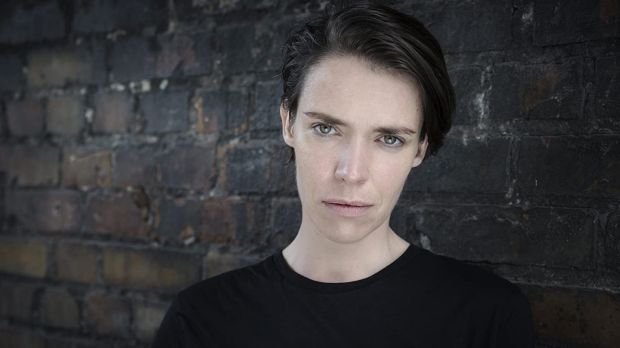
Caoilfhionn Dunne Photo Credit: Ste Murray

Finally Sarah writes this review from April 30th.

The Rock- online performance for Dear Ireland- Abby theatre- written by Phillip McMahon- performed by Caoilfhionn Dunne

The rock is an insight into the stone cold society that we live in, with deep rooted beliefs that affect us more than we may think. A worthwhile watch that you, for sure, won’t take for granted.

The main character (played by Caoilfhionn Dunne) breaks the fourth wall, talking directly to the camera about her experience of lockdown through the format of a video diary. She tells us about the societal pressure she feels in everyday life and gives us an insight to how she makes decisions that affect her. She proposed to her girlfriend, but questioned what marriage meant to her. She tells us about the strain on the relationship with her mother, who has never fully accepted her sexuality.

Overall it was an extremely well put together piece. The subtlety of Caoilfionn’s performance was impeccable, to the point where it felt natural, as if she was talking to us through the diary. I also think the online medium was used to its fullest potential. Being able to adapt a story to the circumstances we find ourselves in, and not feel out of place, is a huge skill.

The design was simple and didn’t distract from the piece, but I wonder if a more cluttered backdrop could have reflected on the obstacles the characters have overcome.

With that said, it carries an extremely important message, making you examine the importance of “social norms” in today’s society.

Sarah Carolan is a member of Explore Youth Theatre, Leixlip, Co.Kildare and a Youth Theatre Ireland Young Critic for 2021.

To Be A Machine (Version 1.0) Reviewed by Young Critics Aoife Murphy & Áindréas Fallon Verbruggen

As the dust settles on this year’s Dublin Theatre Festival, two of our Young Critics give us their respective takes of Dead Centre’s To Be A Machine (Version 1.0)

In this episode of The Prop Room, Áindréas Fallon Verbruggen take look at To Be A Machine. 

This online play created by DeadCentre and Mark O’Connell for the Dublin Theatre Festival, explores the mechanics of humanity and if we are really as different as the machines we use. 

You can listen here: https://anchor.fm/aindreas-fallon-verbruggen/episodes/Episode-2-To-Be-A-Machine-eks624

Here Aoife Murphy gives us her take on To Be A Machine (Version 1.0)

Laughing in the face of level 3 restrictions, Dublin Theatre Festival held their head up high as they re-imagined what we know as theatre and delivered a superb socially distanced performance.

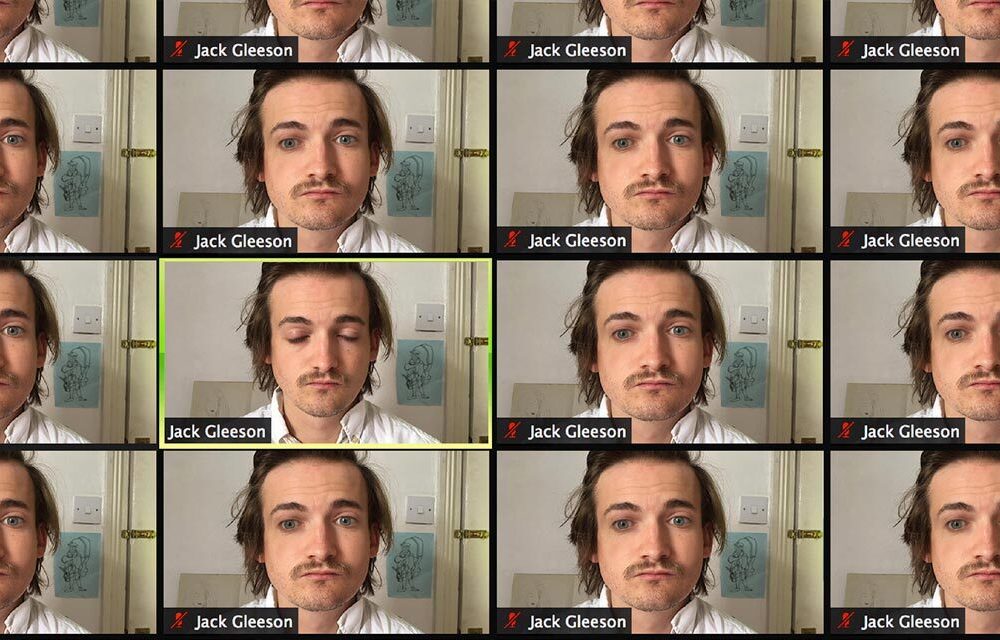
Developed and supported by the Science Gallery at Trinity College Dublin, ‘To Be a Machine (Version 1.0)’ by Dead Centre and Mark O’Connell, is adapted from the Wellcome Prize-winning book by Mark and explores the idea of theatre without the barrier of a body. Staring critically acclaimed actor Jack Gleeson, playing himself, he actively attempts to not be a machine while the audience watches the live performance from Project Arts Centre in the comfort of their beds.

What is a forty five minute performance on the exploration of technological possibility and the limits of live performance, feels like a mere second. I found myself craving for more bewilderment when it ended. With its plot line hard to follow, I’m still confused as to what I witnessed exactly. But I think that’s what makes this piece that bit even more interesting. It doesn’t have one solid interpretation, so audiences can take what they want from it.

The slightly eerie atmosphere and wonderful cinematography makes gaining a sense of a personal connection to Jack seamlessly easy as he looks straight into the camera, into us, and rarely breaks eye contact. His soft voice is calming and Jack deals with some minor technical issues very professionally.

The only thing that took me out of the immersive experience is seeing my fellow Young Critic’s faces uploaded on a tablet screen, placed where we would have been sitting if we were physically at the theatre. It’s strange to witness; however it gave me some joy recognising people I know in the sea of digital profiles.

This trippy theatre performance will mess with your mind, challenging what you think you know with the exploration of the philosophical concept of what is existence. In a world constantly looking for answers to big questions, I feel that if this play were to give a solid response, it would suggest that there’s always an absolute to the trivial parts of life.

A 5/5 star performance rating.

Reviewed by Aoife Murphy Oct 3rd 2020.

You can listen to an audio version of this review here:

https://anchor.fm/alan1102/embed/episodes/To-Be-A-Machine-Version-1-0-Reviewed-by-Young-Critic-Aoife-Murphy-emcgso

Aoife is a member of Explore Youth Theatre in Leixlip Co, Kildare and Áindréas is a member of Mr. Sands Youth Theatre,Bray, Co.Wicklow. Both are Youth Theatre Ireland Young Critics for 2020.

Young Critics Panel 2020

Youth Theatre Ireland returned to Dublin Theatre Festival for the 17th iteration of Young Critics.

This year has been like no other, with a Young Critics programme to match. Between June and October, eighteen young people from across Ireland honed their critical skills from the comfort and safety of their own homes.

They have been guided on their journey of critical discovery by our expert facilitators: Alan King in Dublin and theatre critic Dr. Karen Fricker in Toronto.

Over the course of the Dublin Theatre Festival, the Young Critics engaged with several programmed events and presented their critical responses at this special online panel. 

Young Critics have been working with digital tools for criticism for the last number of years and the 2020 panel was an opportunity to showcase this like never before.

This is an edited version of the Young Critics Panel discussion that took place on Sunday, Oct 11th at 4pm.

Young Critics Panel 2020

Our panel of Young Critics discuss:

To Be A Machine (Version 1.0) by Dead Centre

The Great Hunger by Abbey Theatre in partnership with IMMA

The Party to End All Parties by ANU Productions & Dublin Theatre Festival

Chaired by Dr. Karen Fricker Hosted by Youth Theatre Ireland at the Dublin Theatre Festival 2020 https://dublintheatrefestival.ie/prog…

This Youth Theatre Ireland programme is funded by the Arts Council and the Department of Children, Equality, Disability, Integration and Youth.

Come join the Young Critics at Dublin Theatre Festival 2020

This year has been like no other, with a Young Critics programme to match.

Since June, eighteen young people from across Ireland have been honing their critical skills from the comfort and safety of their own homes.

Over the course of the Dublin Theatre Festival, the Young Critics will engage with several programmed events and will present their critical responses at this special online panel.

Join us online on Sunday Oct 11th at 4pm for a very special online event.

The Young Critics have been guided on their journey of critical discovery by our expert facilitators: Alan King in Dublin and theatre critic Dr. Karen Fricker in Toronto.

They have been working with digital tools for criticism for the last number of years and we hope that 2020 will showcase this like never before.

To book your place in our special limited capacity Zoom Room panel, please contact Alan King 

We will be live streaming the event to a wider audience though our social media channels.

Please follow us on YouTube and Facebook and Dublin Theatre Festvial here for more updates.

Every Day I Wake Up Hopeful – Reviewed by Ellie O’Connell

Ellie has been a member of Activate Youth Theatre for 3 years and has participated in a variety of workshops and productions in this time. She also has interest videography. She is thrilled to be taking part in the Young Critics Programme 2020, and can’t wait to meet new people and learn all about critiquing theatre!

Rough Magic’s Much Ado About Nothing reviewed by Máiréad Phelan

The 2020 iteration of Young Critics, has like most events globally, been deeply affected by the COVID19 pandemic.

Usually, at this time of year, we are all buzzing with Young Critics excitement. Our group would have met for the first time and had a great weekend together in Dublin.  As spring moves towards summer, the group would begin thinking about some of the great shows they could see in their local venues and start to make their critical reviews. None of that will happen this year.

In an effort to share the Young Critics experience with our readers we are running a selection of their initial reviews.

These reviews were submitted as part of their Young Critics application. As such, they represent the first steps on their Young Critics journey. We hope you enjoy them.

Much-Ado16-9-951x535

Rough Magic Theatre Company’s Much Ado About Nothing. Photo Credit: Ste Murray

Our next Young Critic is Máiréad Phelan. She is member of Free Radicals Youth Theatre, based at Siamsa Tíre Theatre, Tralee, Co.Kerry.  Here she reviews Rough Magic Theatre Company’s touring production of Much Ado About Nothing. 

Towards the end of last year, on the 9th of November 2019, in the Siamsa Tíre Theatre in Tralee, Co. Kerry, I saw Rough Magic’s production of Much Ado About Nothing. It was very well advertised play; with an almost full house on the night I attended, with people of various age groups filling up the seats of the theatre.

At first, I was apprehensive of going. Shakespeare plays, to me, always seemed like drab, dull affairs due to my only experience being that of my Leaving Cert and Junior Cert required Shakespeare play, but Rough Magic blew me away with their incredible performance of Much Ado About Nothing.

Rough Magic took a modern approach to the classic drama-comedy, setting it in a colourful summer caravan park, with the character’s costume and roles updated for the modern era. This was, admittedly, a strange contrast to the Shakespearean English they were using, but I felt it just added to the wonderful, absurd humour that ran throughout the play.

Absurd, loud, colourful, and humorous seemed to be the main components of this play and the talented actors in Rough Magic pulled it off brilliantly. It was a crude and wacky play, with the introduction of outfits for the male actors and a hilarious dream sequence in which a character, Benedick, looses, his *ahem* Bene-dick. The prop they used, of course, was a sausage.

With a less talented cast, the script may have come across as too corny or in-your-face, but the talented actors in Rough Magic projected well, hit their lines and were wonderful both in the comedic scenes and the scenes that carried a bit more dramatic weight.

KAF19-JDK-Rough-Magic-13-720x480

Rough Magic Theatre Company’s Much Ado About Nothing. Photo Credit: Ste Murray

Two characters, who were both a comedic and a dramatic centrepiece, in my opinion, were Beatrice and the aforementioned Benedick. At the beginning of the play, both characters despised each other, but by the end, they were in deep love, though still bickered. The actors made this seem like a natural progression and were one of my favourite plot-threads in the play. It was hilarious and somehow, this entirely comedic play got me incredibly emotionally invested in the relationship and character dynamics.

Rough Magic’s Much Ado About Nothing was a gut-busting and surprisingly emotional play, with a highly talented cast. I would highly recommend both Rough Magic for its talented actors and clever use of modern settings, while Much Ado About Nothing for anyone looking for a feel-good play about love.

Máiréad Phelan. She is member of Free Radicals Youth Theatre and a Youth Theatre Ireland Young Critic for 2020.

Máiréad Phelan has been a member of Free Radicals Youth Theatre in Siamsa Tíre for 3 years now. During this time, she has done 6 stage performances and attended several workshops, centred on acting, writing and stage production. She immensely enjoys writing and does so in her (little) spare time. Mairead is looking forward to what she can learn from Young critics and to meet all new people who might share her interests, as well as seeing some hopefully interesting new shows.