Young Critics Residential – A tale of Cheating, Robbery and Extortion by William McCabe

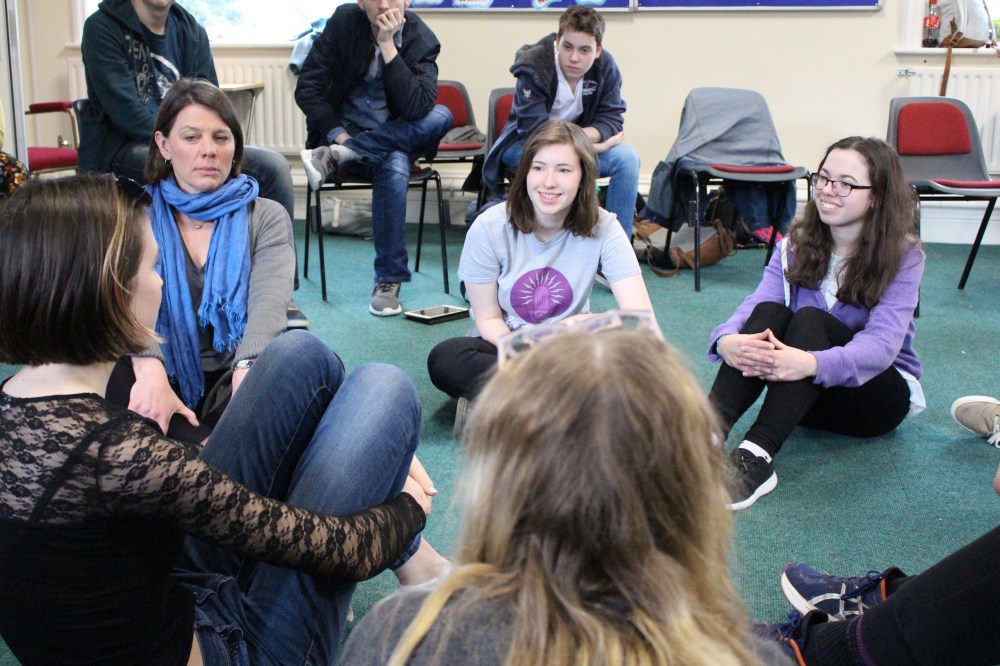
Two weeks ago, Youth Theatre members took their first steps towards becoming Young Critics.  Over the weekend of the 6th to the 8th of April, 16 youth theatre members met for the first time and bonded over a love of critical review.

After viewing two plays which sat at two very different ends of the performance art spectrum – The Unmanageable Sisters being a lighthearted comedy with a dark, fiery underbelly and Tryst being a heavy trip of stretched moral ambiguity and rapid-fire accusations, twists and reveals. But these plays were conjoined in topical themes – such as relationships and abortion – that left the budding critics fair ground to compare and discuss.

IMG_4947

Discussion ran rampant, with healthy engagement of differing views and opinions fueling debate and insightful commentary. Despite the group being divided over which play they preferred, this never truly divided the group, but actually helped build critical thinking, while also teaching how to hold ground and justify an opinion – something very important for a critic.

The social backdrop a program like Young Critics sets itself upon proved no obstacle, with participants going from first greetings to Shakespearean murder in a couple of hours. Everything grew from here, especially back at the hostel. Jenga tested trust the first night, but nothing compares to what came the second – Monopoly, a tale of cheating, robbery and extortion. Some riddles were thrown about, and tunes banged out on a guitar.

IMG_4903

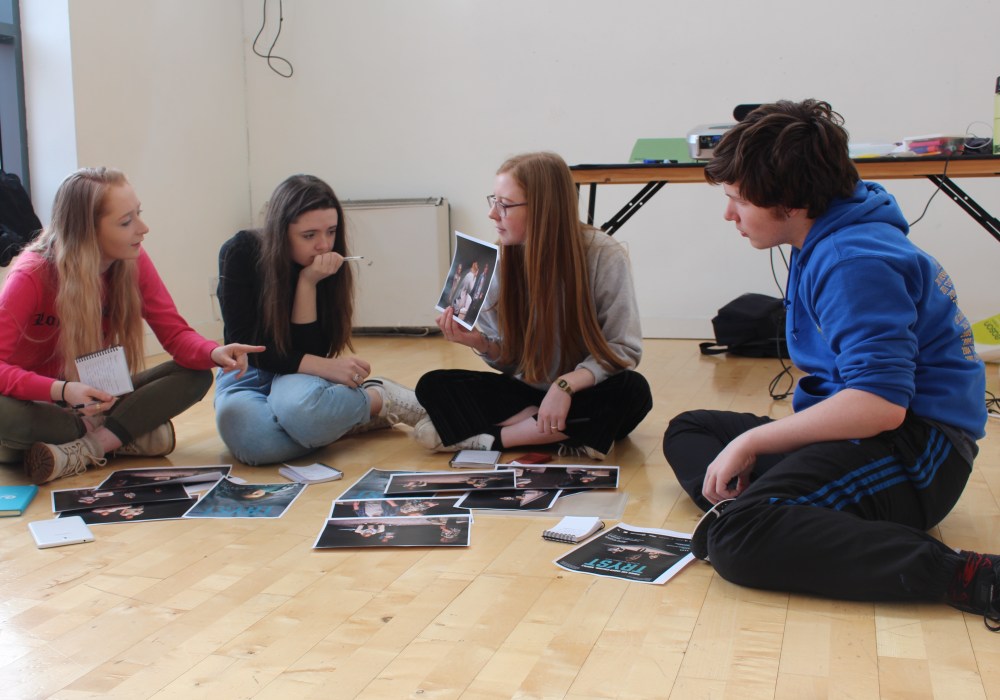
William McCabe with fellow Young Critics Charles, Róisín and Shane investigate the text of Tryst by Finbarr Doyle & Jeda de Brí

This, paired with the program pushing for further exploration of the digital space, could lead to collaborative theatre reviews in the form of video & podcast. An exciting new frontier awaits the program, and this young critic cannot wait to see where this goes.

IMG_4912

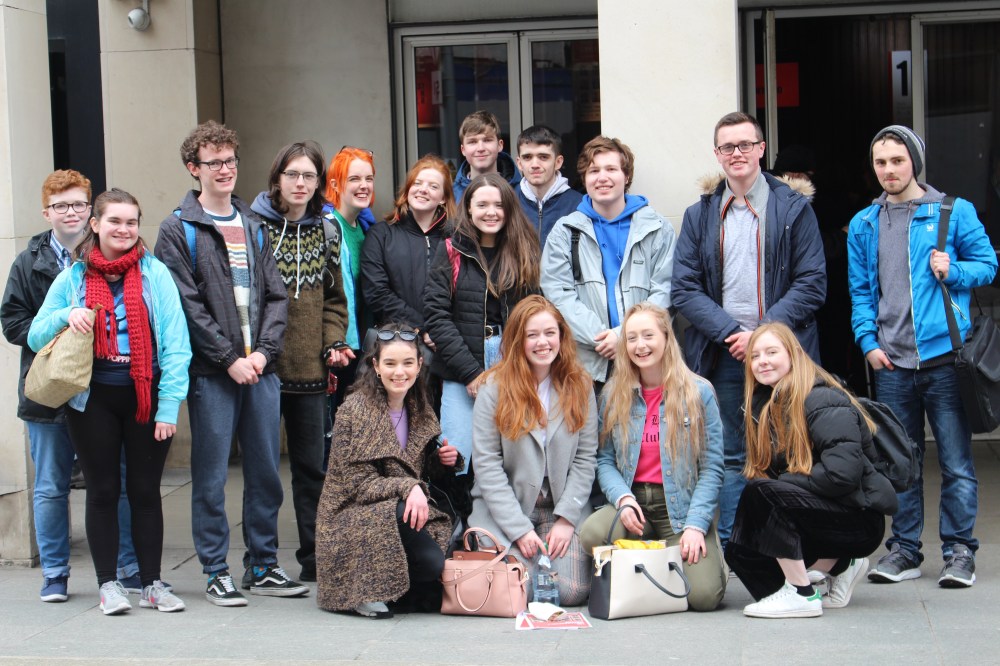
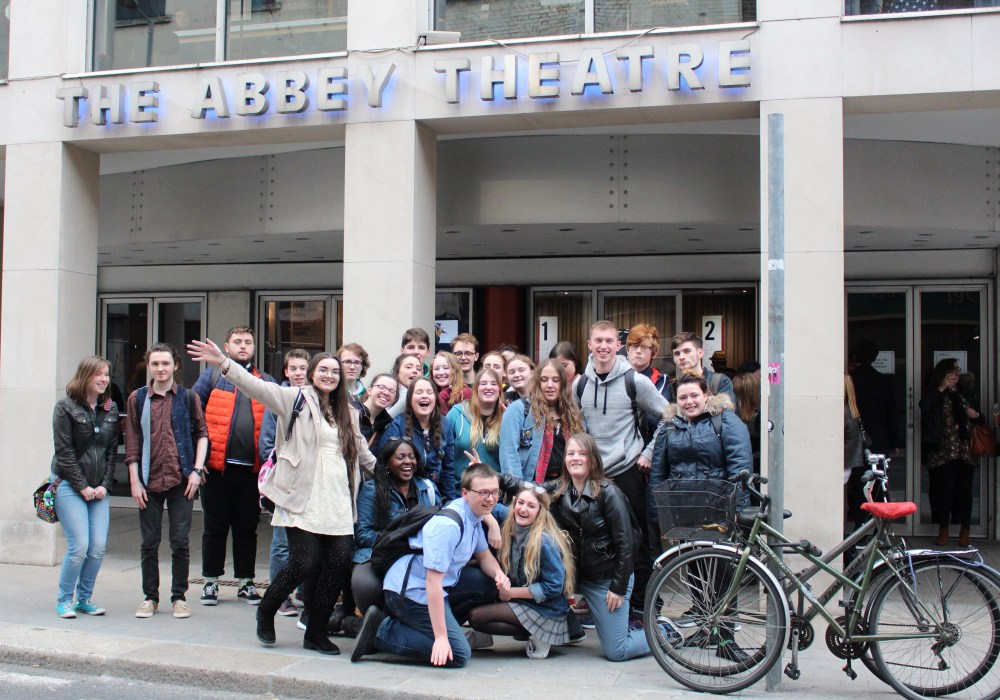
The Young Critics visit Abbey Theatre, Dublin.

William McCabe is a member of  Griese Youth Theatre in Balitore, Co.Kildare and is a Youth Theatre Ireland Young Critic for 2018.


A Class of Its Own by Molly Foley

During the Dublin Theatre Festival, the Young Critics  paid a visit to the New Theatre to see a performance of Class by David Horan and Iseult Golden.

Class will be returning to the Peacock Stage in January and Molly Foley from Activate Youth Theatre has this review from its October showing.

This new play, written and directed by Iseult Golden and David Horan is in many ways quite simple. The set is realistic and the plot is a straightforward narrative, with only three actors playing the five characters established in the piece. Despite this, Class is one of the most engaging, enjoyable and thematically-rich plays I’ve seen in a long time.

The story is that of two working-class parents, Brian (Stephen Jones) and Donna (Sarah Morris), who are called in to their son, Jayden’s school to talk with his middle-class teacher, Ray McCafferty (Will O’Connell). The parent-teacher meeting that unfolds is broken up with scenes of Mr. McCafferty’s interactions with Jayden and another student in his class during which Jones and Morris seamlessly take on the roles of the two children. These relationships develop and change as these characters deal with internal resentments and face a variety of issues that arise through the play.

DPyjE1aW0AA5wy_-1

Stephen Jones and Sarah Morris in Class. Photo Credit: Ros Kavanagh

The play manages do deal with issues of social class and notions of status subtly without hammering in an established opinion or belief. Instead, it is a perfect example of ‘show don’t tell’, starting a conversation through real, flawed and relatable characters, each with valid motivations, opinions and outlooks. It does not paint characters as ‘good or ‘bad’ and doesn’t depict anyone as in the right or the wrong. Those decisions are left in the hands of the audience and I believe that by the end of the 75 minutes, most viewers will have had at least one moment of sympathy and/or identification with each character in the play.

Class feels like a very down to earth play that knows what it is setting out to do and does it well without any self-importance. Although the plot develops in very unexpected and extreme ways, it never feels like it is being dramatic for drama’s sake.

IMG_2965

At its heart this show is an exercise in empathy, not asking for audiences to choose or change sides, but just to listen and perhaps to briefly find themselves in the shoes of others.

I would consider this show a must see. With a sharp, well written script and stunning performances, this show is as hilarious as it is heartbreaking. Five stars.

Molly Foley is a member of Activate Youth Theatre and a Youth Theatre Ireland Young Critic for 2017.

IMG_3014 (1)

Molly Foley, Activate Youth Theatre

Class returns to the Abbey Theatre for a limited run from January 24th 2018.

A Room With Two Views

As  2017 comes to an end we’re taking the opportunity to post some reviews from our Young Critics.

In total the Young Critics saw 15 shows this year. These include the six they saw in Dublin as part of Young Critics as well shows in the Abbey Theatre, their local venues, The Edinburgh Fringe and even the West End in London.

First up Lara Cody from Explore Youth Theatre gives us her impression of Room

I went to see the production of Room in the Abbey Theatre with high expectations. The production was first an international best selling novel which won many awards. This was then brought to screen and finally stage. The many awards Emma Donoghue’s writing has won, along with many positive comments from friends and family led me to expect a heartbreaking and moving production that will bring me to tears. I was not disappointed.
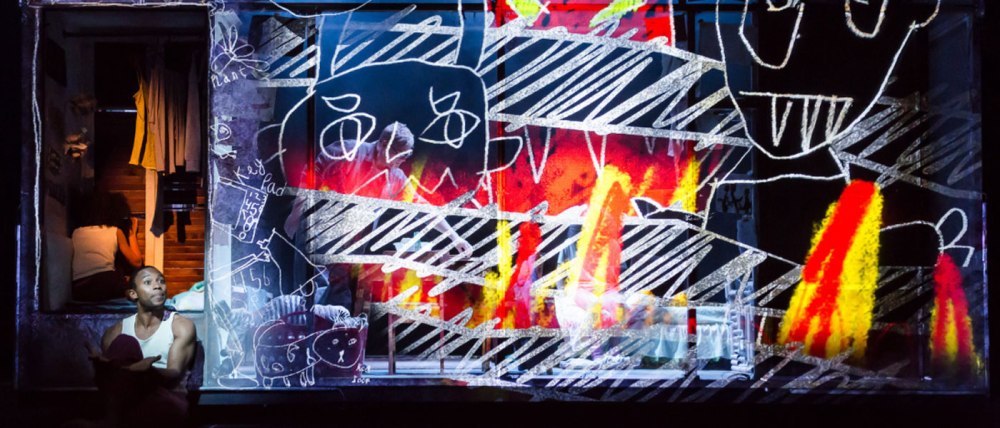
Room_Hero_Landscape

Room tells the story of ‘Ma’ (Witney White), a young woman who was abducted at 19, she was held in a shed made into an all-purpose room, where she was beaten, raped and impregnated and her 5 year old son Jack (Darmani Eboji). The production begins with a light atmosphere as Ma and Jack go about their daily routines. It seems that everything is perfectly fine and there is no mention of ‘Old Nick’, their captor. Once Jack is asleep, we see the distress and frustration of Ma. The light atmosphere changes dramatically to a much darker, somber mood as Old Nick (Liam McKenna) steps into the room. The mood becomes increasingly darker and tense as the first half progresses and Ma is becomes more desperate to escape the room. The building tension climaxes in an incredibly powerful song sung by Ma. It left me clinging on to the edge of my seat, completely blown away and consumed by the performance and production. I did not want it to stop for the interval!

One thing that I was sceptical about was the musical aspect of the production. I was not sure how they would turn such a tragic story into a musical as there have been productions where the added musical interpretation has taken away from the powerful tale. However, I was happily surprised by the incredible music that most certainly added to the overall production. The moving and breathtaking ballads by Ma allowed us an insight into her thoughts and emotions, as the story is told from Jack’s perspective. I must admit that it was the musical talents of Witney White (Ma), Fela Lufadeju (Big Jack), Cora Bissett and Kathryn Joseph (Composers) that brought me to tears and left me talking about the production days after.
IMG_3027 (1)

Lara Coady 

The clever device of splitting the part of Jack into ‘Little Jack’ and ‘Big Jack’ was a great success. The use of a child actor allowed us to witness the innocence of a child along with accurately representing the intimate and protective relationship of a mother and child, while the older actor allowed us to see how imaginative, colourful, curious and questioning Jack is. This was a brilliant way to solve the problem of a child actor carrying the responsibility of such a big part. This Abbey Theatre and Theatre Royal Stratford East co-production was a great success and received a well deserved standing ovation. ‘Room’ deals with themes such as abduction, rape and depression in a powerful way, leaving the audience speechless and thinking of the production for days after. 5 stars.

Lara Coady is a member of Explore Youth Theatre, Leixlip Co.Kildare. She was a Youth Theatre Ireland Young Critic for 2017.


Meanwhile Cian McGrath from Free Radicals Youth Theatre in Tralee has this to say on Room.

Room is, at its heart, a play about love; more specifically, the love between a mother and her son. In Room these two characters are forced to endure their existence in a single room, with no contact from the outside world. One would think that this would allow for a great amount of empathy and emotional connection. But this play can only grasp for such emotion through contrived, over-sentimentalised scenes, whose only feeling it can evoke in this viewer is boredom and annoyance.

Room begins with our narrator, Big Jack (Fela Lufadeju) who narrates the daily process behind life in what is simply known as ‘Room’. This is when our two principal characters are introduced; Ma (Whitney White) and Little Jack (Harrison Wilding). This mother and son duo go about their daily routine in the most over-enthusiastic method possible; which should serve as a hint for the forced emotion the play tries to pry out of its audience as it progresses. Their rudimentary schedule is played out with such happiness that one would expect both characters to break out in song at any moment; fortunately, this is not the case.

680x384-2.jpg

Witney White as Ma and Liam McKenna as Old Nick in Room. Image credit: Scott Rylander.

Not much information is revealed about our characters’ situation, but as the play progresses we realise that Ma was kidnapped years ago, and that inside Room she gave birth to Jack, her five-year old son. Her kidnapper, known only as Old Nick, is Jack’s biological father. And yet at no point are any of the real emotions behind captivity revealed; both mother and son simply go about their day with larger than life enthusiasm, except when they engage in shouting matches with one another. Little Jack’s thoughts are occasionally conveyed by Big Jack, but this is just another diversion; as the play progresses Big Jack’s role diminishes significantly.

This is essentially the major flaw of Room; its need for emotional intensity means that as the play progresses each scene invariably ends with someone shouting out in anger or hurt. In no scene are there ever any moments of quiet reflection; through mere dialogue the play becomes a bombardment of sound, and an assault on the viewer. At no point does this drama offer us a moment of silence, which could at least punctuate the passionate intensity of emotion displayed in other scenes. Room can’t seem to function without scenes in which characters bring themselves to the highest point of their emotional brevity, only for the next scene to begin with the same normal, regular emotion only to catapult into another barrage of furious shouting in an endless, tiring pattern.
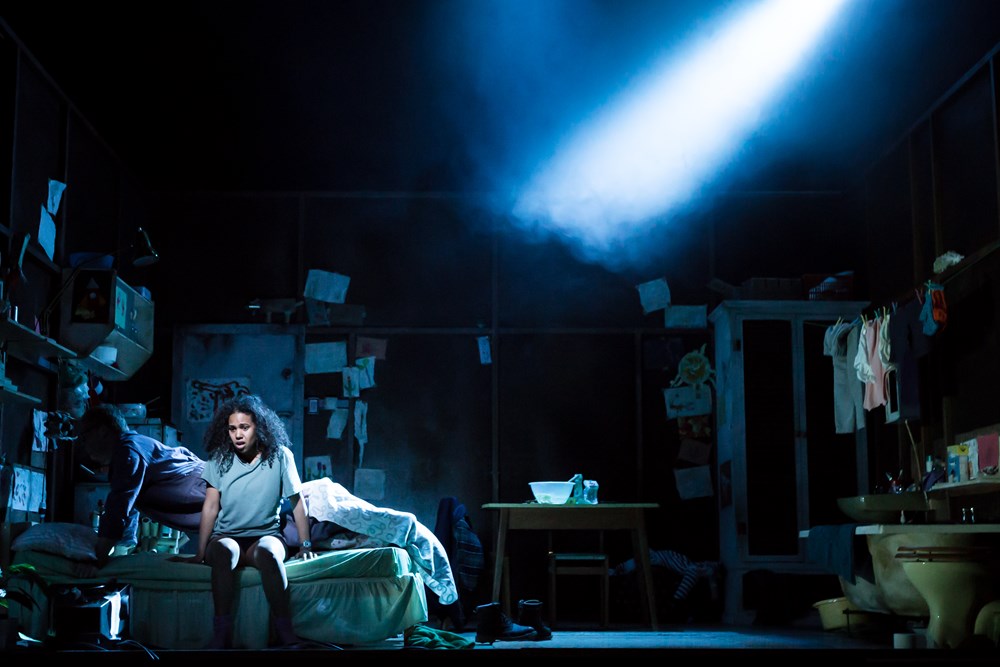
liam-mckenna-and-witney-white-room-c-scott-rylander-3

Liam McKenna as Old Nick and Witney White as Ma in Room. Image credit: Scott Rylander.

Onstage there is a large box which represents Room, the enclosed space in which Jack and Ma are confined to. And yet it never feels as though they are trapped in a confined space; there is nothing claustrophobic about Room’s set. Instead, it opts for a more unconventional approach; the set serves as something malleable, at one point even revolving. But while these may seem like ingenious techniques, they soon grow tiresome and are little more than gimmicks to make up for the play’s other deficiencies. Its interesting movements may captivate at first, but like the play, they do nothing to enforce the idea of entrapment or claustrophobia. Instead, they feel like little more than a smaller stage built solely for the purpose of flashy diversions.

Ultimately Room is a failure, due to its inability to understand the limits of emotion. Its scenes of emotional intensity play out in dizzying fashion, with each one further reinforcing the play’s lack of knowledge about an audience’s capacity for empathy. Room wants to be a rollercoaster of emotions, but ultimately it is a collection of missed notes and woeful script making decisions that only alienate any potential viewer. Witnessing it is like living through Groundhog Day; the reason for it may change, but each scene begins without any sense of what tone will be conveyed throughout, and will ultimately end in another failed attempt at emotional connection.
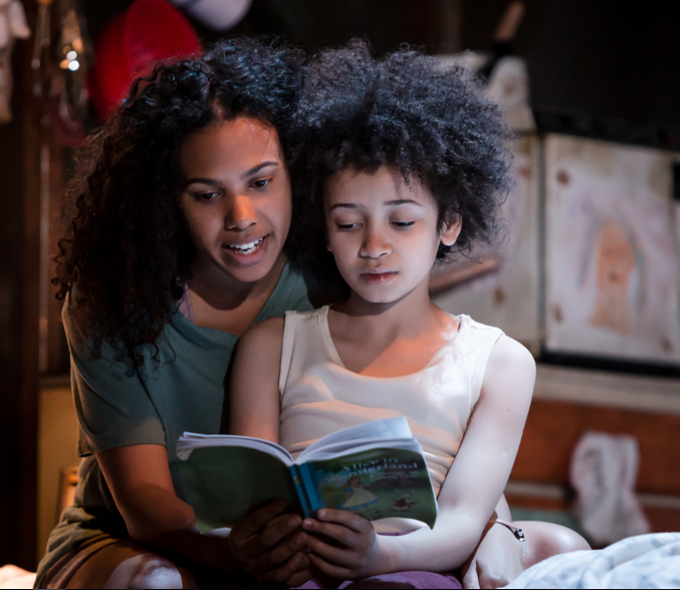
680x590-2

Witney White as Ma and Harrison Wilding as Little Jack in Emma Donoghue’s Room. Image credit: Scott Rylander

Its deficiencies can be effectively captured in one scene in the play’s first act, in which Jack counts as far as he can to avoid having to hear any noise outside his room. Outside his closet a rape scene occurs between Old Nick and Ma, and it is clear that this is a regular occurrence in their lives. As this is happening the stage revolves, as Jack’s counting is timed with the creaking of the bed outside his closet.

IMG_3073 (1)

Cian McGrath

The whole thing becomes a twisted, sordid game and a parody of the emotion it tries to provoke. As the set continues to revolve onstage, the play has veered off wildly, and is far removed from the realm of emotional relatability.

Room is essentially that; a revolving stage with a clear target, but one that can never effectively grasp it. Its diversions can only go so far as to distract the viewer from it’s clear problem in conveying emotion.

Cian McGrath is a member of Free Radicals Youth Theatre in Tralee, Co.Kerry and a Youth Theatre Young Critics for 2017.

Room was staged at the Abbey theatre from June 23rd – July 22 2017.

Young Critics Panel Discussion at Dublin Theatre Festival 2017 (Full Audio)

The Young Critics Panel discussion took place at Project Cube on Sunday Oct 8th as part of the Dublin Theatre Festival.

Listen to full audio here are our panelists discuss three shows in front of a live audience.  Chaired by Helen Meany.


Our Panelists were:

The Second Violinist

IMG_3021

Young Critics Panelists for The Second Violinist

Tadhg Carey – Celbridge Youth Drama, Co. Kildare 

Molly Foley – Activate Youth Theatre, Cork

Cian McGrath – Free Radicals Youth Theatre, Tralee, Co. Kerry

Aaron Dobson – Leitrim Youth Theatre Company, Carrigallen


Class 

IMG_3027

Young Critics Panelists for Class

David Quinn – Monaghan Youth Theatre 

Sean McManus – Dublin Youth Theatre 

Lara Coady – Explore Youth Theatre, Leixlip, Co.Kildare 

Caoimhe Kenny – Roscommon County Youth Theatre


Hamnet

IMG_3234

Young Critics Panelists for Hamnet

Luke Murphy – Lightbulb Youth Theatre, Mallow, Co.Cork

Vanessa Byrne – Mayo Youth Theatre 

Kiara Toal – Monaghan Youth Theatre 

Ella McGill – Complex Youth Theatre, Dublin


IMG_3014

Youth Theatre Ireland Young Critics at Dublin Theatre Festival 2017

Youth Theatre Ireland’s Young Critics Set For Dublin Theatre Festival

With the Dublin Theatre Festival starting today we are gearing up for  Youth Theatre Ireland’s Young Critics  to return once again to the DTF.

Since April, the Young Critics have been honing their critical  skills through workshops and online discussion with the support of professional theatre critics and facilitators. They have also been seeing lots of theatre, collaborating  with a group of Scottish  Young Critics and creating  their own criticism in familiar and unusual forms…

The Young Critics, representing youth theatre from all over Ireland, come together from Oct 6th – 8th, to see a number of shows, and take part in the Young Critics Panel on Sunday Oct 8th. 

The three productions the Young Critics are going to see are:


With Young Critics representing Kerry, Kildare, Cork, Leitrim,Dublin, Monaghan, Mayo and Roscommon there are workshops, lively discussions and the Young Critics Panel itself. Here the Young Critics will get the opportunity to voice their considerable opinion on the work of the Dublin Theatre Festival.


Join us Oct 8th at the Project Arts Centre, Dublin at 1pm. This year’s panel will be chaired by Helen Meany.

Young Critics International Exchange by Luke Murphy

Creative Commons is a 2-year project funded by the European Union’s Erasmus+ programme.  It provides Youth Theatre Ireland and  Youth Theatre Arts Scotland, our sister organisation in Scotland, with the opportunity to share best practice across sectors and build new resources in Young Critics practice and Young Leader mentorship and skills development.

The Young Critics International Exchange brought 24 together from Ireland and Scotland for five days in Dublin. During the Easter holidays, the group took part in workshops and saw a number of professional productions at theatres across the city.

Luke Murphy from Lightbulb Youth Theatre in Mallow, Co. Cork was selected to take part in the programme.

Here Luke reflects on those five days in Dublin. 

“Youth Theatre Ireland’s Young Critics International Exchange  2017 was a fantastic experience that both provided skills in forming critical opinions on theatre, as well as exploring the different means of doing so. What resulted was five enjoyable days in Dublin city.

IMG_0760

Young Critics Aaron Dobson (L) and Luke Murphy (R)

Arriving at the GPO, I met up with 13 other Irish youth theatre members, as well as some of the staff from Youth Theatre Ireland. Immediately I was faced with a whole group of friendly people who seemed just as excited for the week’s events as I was. We travelled to the Marino Institute, which was where our workshops and accommodation were located. Upon arriving, we met an additional ten youth theatre members from Scotland. This were all members of  groups affiliated to Youth Theatre Arts Scotland. One of the things that impressed me the most about the experience was how well everyone got along, and how quickly friendships formed.

IMG_0685.jpg

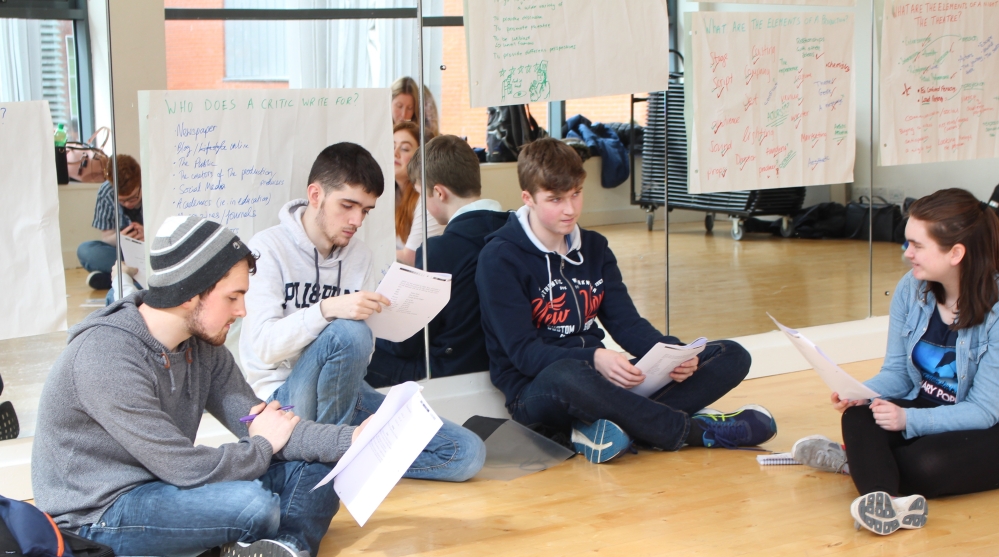
Theatre Critic Gareth Vile workshops with the Young Critics

Of course, the workshops were a great way of achieving this. We would each get our own time to express opinions of the various productions we saw, as well as what we were expecting prior to the performances. I found that discussing theatre can be just as exciting as watching it live. It was incredible to see the different perspectives from which people approached the shows we saw. The best thing about the workshops, was how they felt at the same time both a focused discussion on a piece of theatre, and a casual chat about a play.

The shows in question were The Beauty Queen of Leenane, Silent, and The Train. I think overall everyone enjoyed the productions, whether it was viewing them or discussing their reactions afterwards. The plays were very diverse in themes and style, from one man shows to musicals. This allowed us to review different types of theatre, and the elements that these consisted of.

IMG_0911.jpg

Theatre Critic Karen Fricker (L) listens on as the Young Critics give their opinions

We were guided by a professional group of leaders, who each had their own experience in theatre. They helped us structure reviews, and explore modes of reviewing other than writing, for example vlogging and podcasts. They were very friendly and approachable, accepting questions on how to improve our own skills.

Each day held a new experience. The workshops were unique, each focusing on particular skills crucial to a critic. We also had the chance to explore parts of Dublin city, and enter some of the most famous theatres in the country, such as The Abbey and The Gaiety. I’d never been to any of these theatres before, so getting to see productions in them was a great experience.

IMG_0862.jpg

Luke Murphy and fellow Young Critics enjoying some social time in Dublin

I can genuinely say the I made great friends and memories at Young Critics 2017 and I hope to continue the experience in the months to come, between discussing theatre online, and meeting up with the other young critics once again at the Dublin Theatre Festival. I am delighted to be involved in this project, and it has really peaked my interest in theatre, as well as how to critique it.”

IMG_0896.jpg

The 24 Young Critics from across Ireland and Scotland at the Abbey Theatre


Luke and his fellow young critics will be seeing some shows at their local venues over the summer. They will be making critical responses and we will be posting a selection of them here over the coming months.  You can follow the exploits of the Scottish Young Critics here 


Young Critics International Exchange 2017 – Applications Now Open

Creative Commons: Working together to support youth theatre development

Young Critics International Exchange 2017 - Applications Now Open

Young Critics International Exchange 2017

NAYD are looking for 14 young people, aged 16 – 20, with an interest in learning about and developing skills in creative criticism in theatre.

NAYD is delighted to be partnering with Youth Theatre Arts Scotland to run a 5-day Young Critics International Exchange in Dublin. Part of a 3-year joint project called Creative Commons supported by the European Union via its Erasmus+ programme, the exchange will support each young person to develop their individual critical response process, their understanding of theatre and an individual voice.

When?   Monday 10 – Friday 14 April 2017
Where?  Dublin
Cost?     FREE

CREATIVE COMMONS PROGRAMME

As a Young Critic, you will join 13 other young people from all over Ireland and 10 young people from Scotland in Dublin from April 10th – 14th.

Over the 5 action-packed days, participants will have fun getting to know each other, attend theatre productions, participate in a series of workshops and discussions as well as exploring the theatres and city of Dublin.  Accommodation and workshops will be based at the Marino Institute of Education.

Participants are given the opportunity to see quality productions and develop their critical silks under the mentorship of professional theatre critics Dr. Karen Fricker and Gareth Vile. Workshops will be facilitated by NAYD’s Youth Theatre Officer Alan King and YTAS Theatre Practitioner Amy Watt.

In addition, there will be Young Critics activities taking place in the months after the International Exchange.  Participants will continue the critical conversation on the Young Critics Blog where they will be encouraged to see, and make critical responses to, local productions.

The Irish group will come together in a similar way in October as part of the Dublin Theatre Festival.
The Scottish group will come together again for a weekend in August to take part in a series of workshops and to see productions at the Edinburgh Festival Fringe to build and hone the critical and creative skills developed in April.

At the end of the project, participants will qualify for a Youthpass, which is a European award recognizing non-formal and informal learning in youth work.

No prior experience is necessary, just an enthusiasm for learning and collaborating!  We are looking for young people who are comfortable meeting new people, working in a highly focused way and are not afraid to share their thoughts and opinions with each other.

ELIGIBILITY

• Applicants must be aged 16 – 20 on 1 April 2017.

• Applicants must be a current member of an NAYD affiliated Youth Theatre.

• Selected participants must be fully available from Monday 10 – Friday 14 April 2017 inclusive, willing to continue the critical conversation online and attend a follow up weekend event as part of Dublin Theatre Festival in October (dates tbc).

HOW TO APPLY

In order to offer individual advice and guidance on developing each young person’s critical skills, places on the programme are limited to 24 (14 from Ireland and 10 from Scotland)
We are looking for young people who are comfortable meeting new people, working in a highly focused way and are not afraid to share their thoughts and opinions with each other.

For full details on how to apply please  download our information pack and application form here  . Please provide us with the information asked for on the form and post your application no later than 5pm on Monday 6 February 2017. You can answer the application questions in writing or if you prefer via a video or voice recording (no longer than 2-3 minutes).

If you have any questions, please contact Alan King

Dates

April 10-14

Venue

Dublin

Bookings

Closing Date For Applications is 5pm Monday 6 February 2017

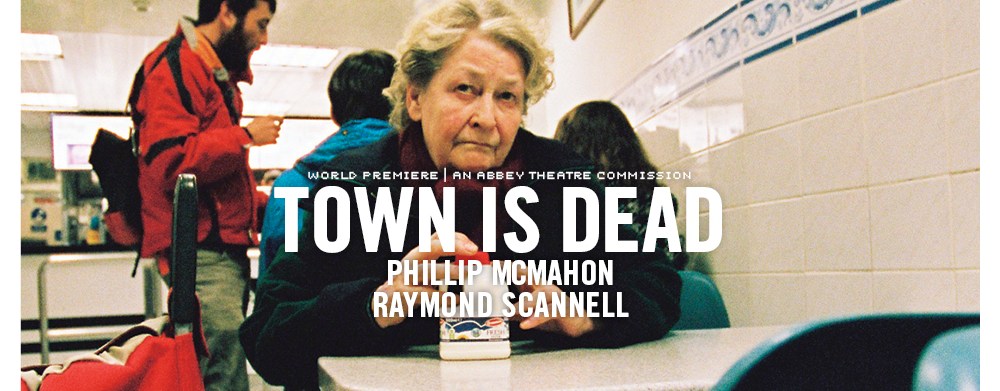
Town is Dead – A Podcast Review by NAYD Young Critic Méabh Hennelly

Way back in June, NAYD Young Critic Méabh Hennelly took a visit to the Peacock Theatre to view Town is Dead by Philip McMahon.

In this podcast Méabh is joined by her friend Isabel Horner to cast their critical eye on Town is Dead.

CREDITS

Méabh is an NAYD Young Critic for 2016 and a member of Dublin Youth Theatre. 

Méabh was also a participant in NAYD’S Watching the NationOnStage and this review is also posted on Watching the NationOnStage Blog.

Wishful Beginnings Reviewed by NAYD Young Critic Emily McGee

The NAYD Young Critics came to Dublin from the 7th – 9th of October for the Dublin Theatre Festival. They attend three productions as part of the Festival. Here Young Critic Emily McGee reviews Verk Produksjoner’s Wishful Beginnings at Project Arts Centre.

beatthedrum-img-7236-ie-1536x1024

Wishful Beginnings . Photo Credit: http://verkproduksjoner.no/

Wishful Beginnings

Wishful Beginnings: undoubtedly a show with the power to start the revolution that our world today needs most.

Upon entering the theatre of the Project Arts Centre on the 7th of October 2016, the audience suddenly, with or without realising, became immersed in the concept that Verk Produksjoner placed before us. The first thing that you can’t help but notice is the towering plywood wall reaching from the floor upwards, seemingly with no end. This wall was placed at the front of the stage, leaving the actors with a stage approximately no more than two metres in width. Seemingly random costume and prop items lined the outer aisles, where the actors waited to begin.

Between the towering wall of the set, and being entirely surrounded by five actors in various stages of curious costumes, to an extent, the audience couldn’t help but feel somewhat enclosed within the space. This made a very bold and effective addition to the performance as it really aided in exposing the concept of the piece.

Wishful Beginnings is not your traditional piece of theatre, but that’s precisely what I loved most about it. It was more of a conceptual, contemporary, abstract piece of theatre. It took an in-depth look at our world and our society at this present moment in time, and explored through means of improvisation and symbolic or metaphorical scenes, what our future will look like if we continue as we are.

Verk Produksjoner touch on topics such as; fashion and popular culture, mental health and self-harm, industrialisation, LGBTQ+ rights, and animal cruelty. These topics were approached in a rather artful way by using metaphors and symbolism, truly advocating the “show, don’t tell” technique. However, as this technique was so well put to use that, on the surface, it almost seemed as though none of these topics were covered. It was only when the symbolism (ranging from the use of costume, prop, script, and lighting tools) became fully understood, did these topics, or “social issues” and the concept of the piece, become the plot.


img_7282-e1460126962746-1080x600

Wishful Beginnings. Photo Credit: http://verkproduksjoner.no/

The acting from all of the actors was to a very high standard. It was very natural and credible. Espen Klouman Hoiner, in one scene in particular, gave an outstanding, powerful and moving performance portraying a painful death. The performances overall were very impressive, especially so when taking into account that parts of the show were improvised. Despite this, the show flowed seamlessly, the improvised scenes becoming almost indistinguishable from the rehearsed, adding to the authenticity of the entire production.

Overall, Wishful Beginnings was a thoroughly enjoyable experience. It was truly a powerful and moving artwork. However, as enjoyable and powerful as I found it to be, I understand that this show is not suited to everybody, as it may be difficult for some to fully grasp the concept, and therefore, the “plot” of the piece. Wishful Beginnings is most definitely a show that I’m glad not to have missed.

Cast and Creative Team: 

With and by Fredrik Hannestad, Saila Hyttinen, Tilo Hahn,  Signe Becker, Solveig Laland Mohn,  Håkon Mathias Vassvik, Per Platou,  Anders Mossling, Espen Klouman  Høiner, Pernille Mogensen,  Camilla Eeg-Tverbakk,  Jon Refsdal Moe, Agnes Gry

Project Arts Centre  as part of Dublin Theatre Festival

Co-production by Black Box TeaterBIT-Teatergarasjen and Teaterhuset Avant Garden.

Emily McGee was a Young Critic for 2016 and a member of Kilkenny Youth Theatre 

Review of The State Of The Nation by NAYD Young Critic Rita Havlin

In the run up to the Young Critics Panel as part of the Dublin Theatre Festival on Oct 9th, we’ve been publishing a series of written reviews by our Young Critics.

In our final review, Rita Havlin from Donegal Youth Theatre reviews The State Of The Nation by Conor Malone

Reviewed 4 June, 2016
Written by Conor Malone, directed by Charlie Bonner
Balor Developmental Community Arts
Balor Arts Centre, Co. Donegal

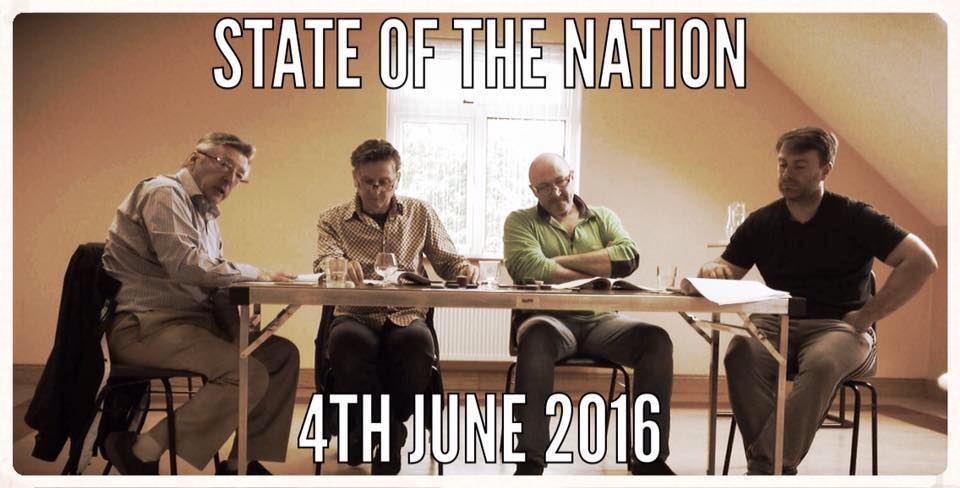
The State Of The Nation is a political satire questioning Ireland’s progress since the 1916 Rising. The play is set during a poker game in the afterlife, during which four famous figures of Irish politics, Thomas Davies (James Lawne), Jim Larkin (Peter Byrne), Michael Collins (Cillian O’Gairbhí), and Charlie Haughey (Conal Gallen), discuss the changes in the country over the last hundred years and the issues it still faces. I found this to be a very interesting way to frame this debate, literally asking “Is this the Ireland the revolutionaries dreamed of?”

A simple set design helps the audience focus on the content of the play. The action takes place on a raised white platform around a large table; a hat stand and a sideboard with decanters of whiskey stand at either end of the platform. Dim lighting and smoke set the scene for a classic game of poker, while a green backlight gives a supernal feel. This worked extremely well in balancing the realistic with the non-naturalistic.

7-all-the-cast-in-reheasal

Conal Gallen, James Lawne, Peter Byrne, Cillian O’Gairbhi in rehearsals for The State Of The Nation. Photo Credit: Mark Fearon

The actors did a superb job in balancing the speech and mannerisms of different points in history, making no word or action feel out of place while also managing to maintain realistic and strongly recognizable characters. Their only downfall, which was perhaps a fault of the play itself, was a lack of movement, as the actors only left the table to refill their whiskey.

Indeed the writing is where The State of the Nation falls short. The play is meant to be comedic, and while no lines fall completely flat and some earn a hearty laugh from the audience, many jokes are overused or too similar to previous ones, and quickly lose their punch. The play touches on many important issues such as government salaries and corruption, the introduction of water charges, and the cost of education, but brought up in such a short space of time each issue begins to sound the same and each discussion seems half-baked. There is no suggested solution for any issue, and so no debate feels complete before the play moves on to a new topic.

2-the-state-of-the-nation

Poster design by Alan Reid

Staged as part of the Donegal County Council’s 1916 Commemoration, the play aims to celebrate Ireland as the country grows and develops, which it does to a degree, but it felt a little too critical of the nation to do this fully. The play fails to address the rich culture and art that Ireland has to offer, or the ways in which Ireland has progressed farther than many countries, focusing instead on the country’s political failings. However I must compliment the cast and crew as this production, despite its weaknesses, left me feeling satisfied, appropriately patriotic, and chuckling as I left the theatre.

Come join Rita and all our Young Critics on October 9th at 1pm at Project Arts Centre. 

They will be critiquing three productions as part of Dublin Theatre Festival 2016.